

Aimer Farming wins NZD $600,000 for AI pasture tools
Wed, 6th May 2026
Aimer Farming has secured government co-investment to expand its AI pasture decision tools for New Zealand farmers, with the Ministry for Primary Industries investing $600,000.
The funding is part of a NZD $1.675 million project to extend the company's pasture measurement and decision software across hundreds of dairy and beef farms. It will also support the development of new tools designed to help farmers make day-to-day grazing and feed decisions more quickly.
Based in Hamilton, Aimer Farming launched its AIMER product in 2023. The platform is already used on more than 650 farms, with more than 10,000 pasture measurements recorded each week.
The next phase centres on a new feature called Ask AIMER, a chat-based assistant within the AIMER smartphone app. Farmers will be able to ask questions about actions to take on their farms and receive recommendations tailored to their conditions.
The underlying system already produces grazing and supplement recommendations for individual farm setups. Using smartphone-based computer vision, it measures pasture, forecasts feed supply, and creates grazing and supplement plans based on each farm's constraints.
By adding a conversational interface, Aimer Farming aims to help farmers engage directly with those recommendations instead of relying only on reports and dashboards. Proposed uses include asking which paddocks should be taken out for silage in a given week or how grazing and supplement plans should be adjusted as conditions change.
Scaling tools
The project aims to upskill more than 10,000 farmers and rural professionals, increase pasture monitoring by 30 per cent, and improve on-farm productivity. It is also expected to support stronger sector earnings and lower net greenhouse gas emissions through earlier feed planning and pasture management decisions.
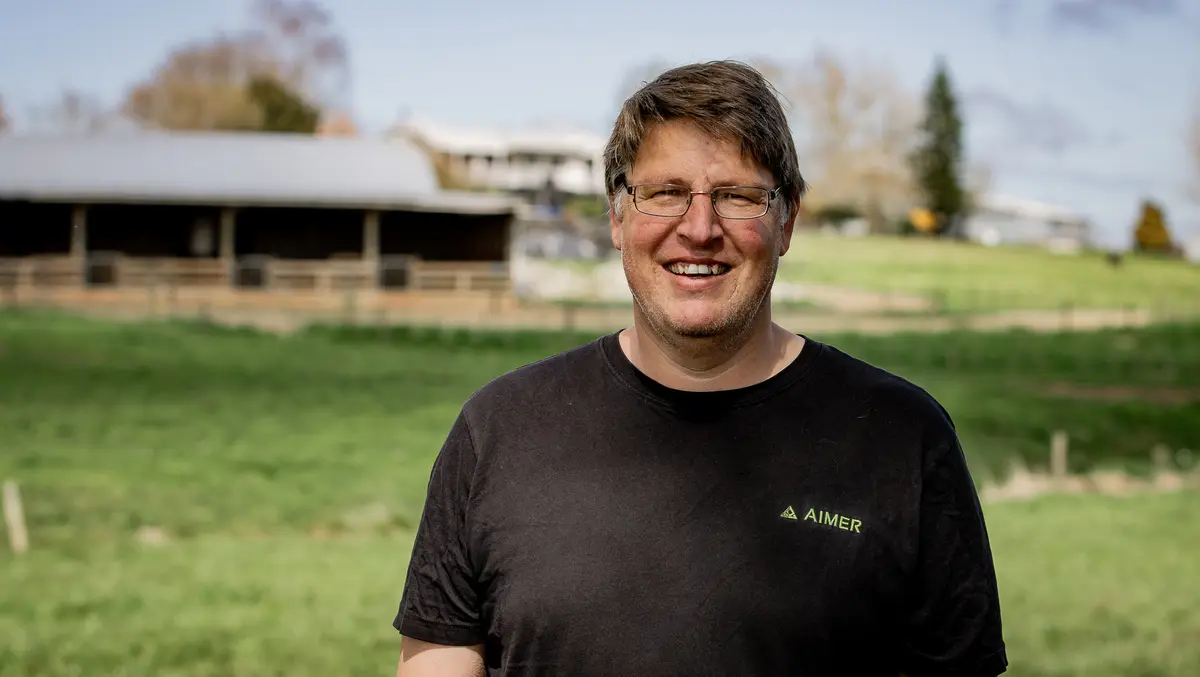
Founder and chief technology officer Jeremy Bryant said the company was trying to move beyond simply presenting data to users.
"Farmers don't need more dashboards of information. They need a better understanding of their options, why they matter, and the confidence to back their own decisions. Then they can act earlier, avoid costly mistakes and get more from every paddock and every cow."
Pasture management is a central issue for New Zealand's dairy and beef sectors, where feed availability and grazing decisions can affect output and costs. Tools that reduce the time needed to assess conditions may also help operators respond more quickly to weather shifts and seasonal variability.
Farmers currently scan part of their farms with a smartphone, and the software estimates pasture levels across the rest of the property. The process is intended to reduce the time spent physically walking paddocks while generating feed wedges and grazing plans.
Decision support
Bryant said the introduction of Ask AIMER marks a broader shift in how farm software is used.
"This represents a shift from software that reports information to systems that actively guide decisions.
"We're building AIMER as the pasture operating system - the eyes to measure pasture accurately, the brain to optimise grazing and supplement plans, and now an action layer that turns insight into clear next steps."
The business was founded in 2021 and focuses on digital tools for pasture and livestock management. Its software combines computer vision with proprietary algorithms to estimate pasture cover, forecast growth, and support grazing decisions.
The government backing comes as agricultural technology companies seek wider adoption of software and automation in core farm management tasks. In pasture-based systems, better forecasting and measurement can influence feed allocation, supplementary feed use, and decisions around silage and stock management.
New Zealand's reliance on pasture-based production also gives domestic agritech companies an opportunity to develop products that could be relevant in other grazing markets. Bryant said the country had an opportunity to export know-how as well as food products.
"Pasture-based farming is one of the world's most efficient production systems," he said. "If we can help farmers improve pasture utilisation and reduce uncertainty in feed decisions, that lifts profitability, animal performance and environmental outcomes - here in New Zealand and well beyond."