

Auckland startup Capiche seeks backers for dyslexia tool
Tue, 13th Oct 2026 (Today).webp)
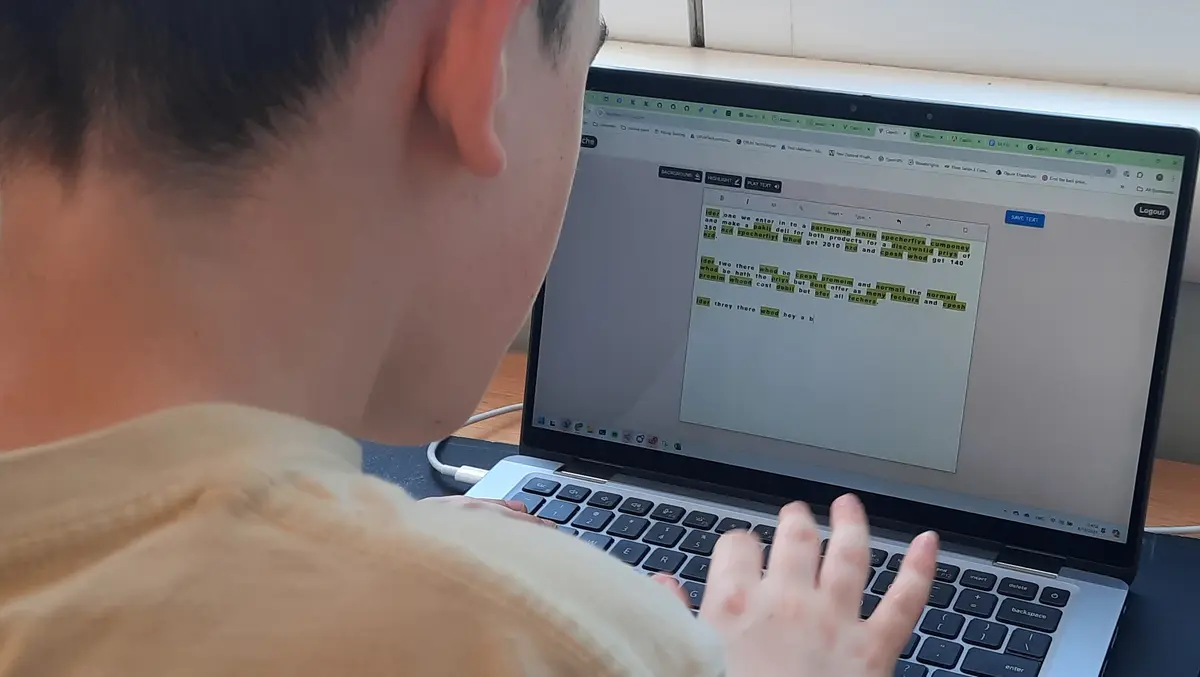
Auckland startup Capiche is seeking investors and commercial partners for its dyslexia-focused writing tool. It says it has signed up more than 1,000 users and worked with more than 75 schools in New Zealand.
Founded by entrepreneur Paul Mallinson, Capiche takes a different approach to artificial intelligence from many writing platforms on the market. Rather than generating essays, emails or reports, the software is designed to help users express their own ideas more clearly without writing the text for them.
Mallinson said the business grew from a personal problem at home. He was motivated to build the tool after watching his dyslexic son struggle to get ideas onto the page despite understanding the subject matter.
"Writing fluency does not predict intelligence," said Paul Mallinson, Founder, Capiche. "Having good ideas and getting them onto the page are not the same thing. For many people with dyslexia, the process of writing gets in the way of showing what they actually know."
He found that existing digital aids such as spellcheckers and grammar tools could correct errors but did not address what he saw as a broader gap between thinking and writing. He then worked with his father, a linguist, to develop a system that learns how an individual writes and offers support based on that person's language patterns and difficulties.
"The goal was never to create a machine that writes for people," said Mallinson. "People with dyslexia don't need another AI tool taking over. They need support that helps their own words come through."
Users range from children aged five to adults in their 50s, according to Capiche. The tool is already being used in more than 75 schools across New Zealand, and interest is also growing in Australia.
Capiche has reached this stage without venture capital or revenue, the company said. It was built with about AUD $90,000 from personal investment and support for research and development from New Zealand's Ministry of Business, Innovation and Employment. The business remains founder-owned and debt-free.
Mallinson's background is in technology leadership, including chief technology officer and engineering management roles. He left full-time employment to focus on the venture and is now seeking commercial support as the business moves towards a paid model.
Commercial plans
Capiche is currently free to use, but it plans to introduce a revenue model through school and institutional licensing, as well as subscriptions for families and individual users. It is also seeking to validate the product's impact through practical evidence and academic research.
Australia is emerging as the first likely export market. Capiche is also building relationships with dyslexia organisations, literacy researchers and education leaders in Australia, the United Kingdom and North America.
"The problem exists everywhere. The opportunity is to build something that can help people globally," said Mallinson.
Public backing
Capiche has also received backing from figures in Auckland's startup ecosystem. Auckland Mayor Wayne Brown said the company reflects the kind of business local innovation programmes are intended to support.
"GridAKL is an incubator for good ideas and Capiche is a standout example of this. Paul is one of the creators and risk-takers of Auckland, risking his livelihood to build something better, and I'm very glad GridAKL is a part of that with him," said Wayne Brown, Mayor, Auckland.
Brown also pointed to the product's potential role in education.
"Capiche is filling a need and will provide teachers with another tool to help support students with dyslexia. Paul saw a gap in the market and filled it. Definitely worth celebrating. By spotlighting Capiche at the Challengers Expo, we hope an investor will take notice and help the business scale up," said Brown.
Pam Ford, General Manager Economic Development at Auckland Council, described the startup as an example of a business combining social and commercial aims.
"Capiche is exactly the kind of startup we love to support," said Pam Ford, General Manager Economic Development, Auckland Council. "It addresses a real problem, has the potential to make a meaningful difference for millions of people, and has genuine global potential."
For now, Mallinson said his immediate priority is to find investors, strategic partners and a commercially focused co-founder who can help build the business beyond product development.
"I know how to build products and solve technical problems," said Mallinson. "What I'm looking for now is someone who can help turn that into a global commercial success."
"There are lots of people advocating for change, and that's important," said Mallinson. "What I can do is build something useful."