

Zetifi and the Great Pivot: Don't fall in love with your solution
Tue, 17th Nov 2026 (Today)
When a business model is made obsolete overnight, the temptation is to cling to what has already been spent. It's the sunk cost fallacy in full flight, soemtimes called the Concord fallacy because before it left the drawing board, the aircraft wasn't ever going to turn a profit. Zetifi, which began by solving rural connectivity out of Wagga Wagga, chose the high road: go back to first principles, find a problem still worth solving, and move before money already invested starts making the decisions.
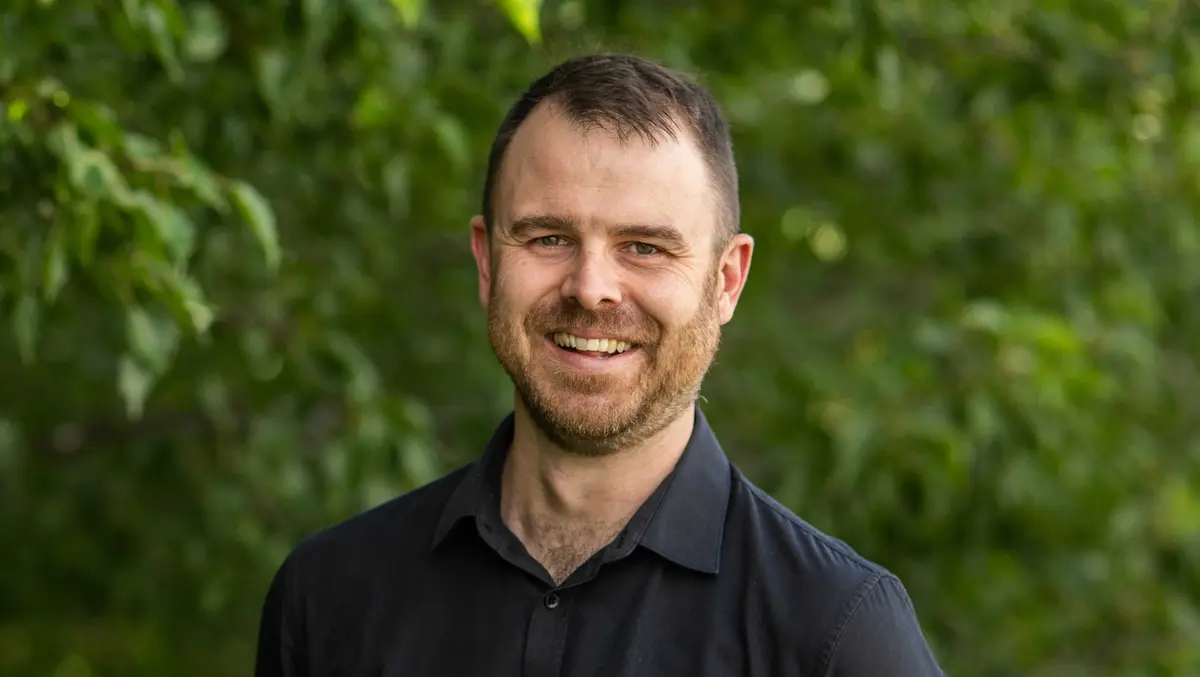
That's according to the company founder and CEO Dan Winson. He said coming off the back of startup mentality was a major advantage. "When we first got underway, we were already 100% focused on finding the right problem. With that approach, the solutions are the comparatively easy part. You really need a problem in a market where it's big enough and urgent enough that people will take action and take a bet on you," he noted.
Back in 2017, the first problem Zetifi took on was rural connectivity. While it took off with various engineering solutions to the issue, something else was piercing the sky; Starlink launched and, Winson said, changed the world. With the problem of a decent internet connection solved far more elegantly than any terrestrial effort could, a company built on that premise had the rug fully pulled out from under its feet.
The question was whether to defend the original solution, or admit the ground had moved.
"If you fall in love with your solution, you are at risk of failing, because your problem has either gone away or changed significantly," Winson said. "Thankfully, we've stayed objective, and we moved quickly at each turn."
A problem still worth solving
When Starlink arrived, the team researched the service, checked its roadmap and assessed what was feasible, then pivoted towards an alternative markets. Step one was identifying a new problem big and urgent enough for a venture-scale return, aligned with the company's skills, and one where Zetifi had existing advantages.
Through its engineering-centric approach and keen sense of customer requirements, Zetifi had already expanded its rural connectivity solutions with a range of smart antennas, radio frequency hardware and partnerships with Telstra, Geotab and others. That kit and those relationships, Winson said, remained were the basis of its pivot and revised focus on lone worker and driver safety, and for a telematics-led solutions built on these foundations.
"Startups succeed because they are small, nimble, and can pivot quickly," he said, invoking Harvard professor Clayton Christensen's concept of the innovator's dilemma which explains how well-managed, industry-leading companies fail by doing everything 'right' when the playing field has fundamentally changed.
Marshal as the proof point
It's not all talk, becuase Zetifi launched Marshal in May 2026. The idea came from a mix of Zetifi's own obligations – it has a fleet and the safety duties that come with it – and from a clear market need. As it was already building connectivity for telematics firms, Winson's team interviewed dealers, vendors and customers, looking for a niche where the technology they already had would matter.
"The thing that kept coming up again and again was SOS buttons and needing a more reliable service," he said. Notwithstanding some 50 competitors already selling similar services, Zetifi's market scan shows that few if any integrated with telematics at the level customers needed. Existing solutions were, essentially, clunky. They didn't use the AI and context sitting in fleet data to check on a team's welfare when it actually mattered, and leave them alone when it did not.
There's echoes of the past concept of 'presence', popular in theory if not practice back in the 00s.
"If someone is actively driving, you don't need to check on them. If they're where they're meant to be, you don't need to check on them," Winson explained. "But if they pulled over on the side of the road and they decelerated quickly, did they need to make a call, or are they're having a heart attack?"
A key differnetiator is integration with Microsoft Office, in use by the overwhelming majority of Zetifi's target market. That provides much of the context, on the one hand, and much of the convenience that remote workers want from their SOS service. "We can see if they're on a Teams call and don't need to hassle them. If unsure, a quick ping and they can tap the button and say, 'Yep, I'm okay.' If there's no response, escalate and bring the human in."
While Zetifi saw space for a better SOS, Winson pointed to the power of partnership in shaping the Microsoft-native design. Telstra took a 10% stake in the company after Zetifi's $12 million Series A some years back, and made that call, which Winson now says was prescient. Telstra was also the first commercial pilot. "They wanted everything landing in Microsoft, because that's how they work...and that's also how nearly every one of our taget customers work."
The response since launch has been strong, and Winson is frank about why. "People see Microsoft and they already use it as their identity foundation. There's a lot of platform fatigue, and having something that just integrates with what you're already using means it isnt only easy and convenient for the remote worker, it's also easy and convenient to add to existing services and if necessary, customise from there."
Zetify's story is instructive. AI and the technologies rising with it will upend countless business models. The options are clinging to a past that no longer exists, or evaluate, reasses, and embrace a radically different future.