

Personal data stories

Bedrock Data extends ArgusAI governance to Google Vertex AI
Last week
#
storage
#
hyperscale
#
cloud security
Bedrock Data expands ArgusAI to Google Vertex AI, giving firms one policy layer to govern agents across AWS, Snowflake and Google.

ShareGate survey says AI exposed data at 29% of firms
Last week
#
data protection
#
ecm
#
martech
ShareGate survey finds AI tools have surfaced sensitive data at 29% of firms, exposing a widening gap between confidence in governance and reality.

UK firms face AI data exposure despite Copilot confidence
Last week
#
data protection
#
document management
#
ecm
UK firms race ahead with Microsoft Copilot, but ShareGate survey finds AI tools are exposing sensitive data and exposing governance gaps.

KnowBe4 launches Agent Risk Manager for AI agent security
This month
#
data protection
#
digital transformation
#
physical security
KnowBe4 unveils Agent Risk Manager to monitor autonomous AI agents in real time, flag prompt injections and curb rogue data access.

Booking.com warns some customers of possible data exposure
This month
#
data protection
#
endpoint protection
#
mfa
Booking.com tells some customers to watch for phishing after suspicious activity exposed reservation details, contact data and messages linked to bookings.

Cambodia scam compounds linked to mobile banking fraud
This month
#
data protection
#
surveillance
#
biometrics
Cambodia scam compounds are being tied to a mobile banking fraud network that hit users in 21 countries, researchers say.

Agentic AI raises new cybersecurity and privacy risks
This month
#
data protection
#
digital transformation
#
martech
Norton Rose Fulbright warns that AI agents could intensify privacy and security challenges for Asian companies as data moves across systems and borders.

Login problems drive consumers away from digital services
This month
#
data protection
#
digital transformation
#
mfa
Thales report finds weak login and sign-up flows are pushing users away, as trust in AI, data handling and digital services remains low.

APAC cybercrime rises 12% as synthetic fraud surges
Last month
#
gaming
#
biometrics
#
cx
APAC cybercrime climbs as synthetic identity fraud accelerates, with desktop-browser attacks, login pressure and bot activity fuelling losses.

AI girlfriend apps exposed private chats in security audit
Last month
#
data protection
#
devops
#
cloud security
Security flaws in 17 AI companion apps used by 150m people could expose intimate chats, photos and voice messages to attackers.

Agentic AI: The potential and the problems behind the new wave of autonomous systems
Last month
#
data protection
#
digital transformation
#
cloud security
Agentic AI promises effortless digital delegation, but its admin-level access to data and systems creates profound privacy and security risks.

MATTR launches digital credential platform on AWS NZ
Last month
#
data protection
#
network infrastructure
#
digital transformation
MATTR makes its VII digital credential platform available on AWS New Zealand, enabling local data residency and lower-latency identity services.

1Kosmos tops KuppingerCole 2026 passwordless ranking
Last month
#
data protection
#
digital transformation
#
mfa
1Kosmos named overall, product and innovation leader in KuppingerCole's 2026 passwordless authentication ranking after review of 26 vendors.

'Shadow AI' misuse emerges as key cyber threat in NZ
Last month
#
data protection
#
ransomware
#
digital transformation
'Shadow AI' misuse by staff has surged as a top cyber threat for New Zealand firms, fuelling rising losses and extortion pressures.

ShinyHunters claims Woflow breach in supply chain hack
Last month
#
data protection
#
ransomware
#
mfa
ShinyHunters claims it hacked merchant data firm Woflow, raising supply chain fears for major brands despite no confirmed breach yet.

Israel-Iran conflict exploited in fresh email scam wave
Last month
#
phishing
#
physical security
#
email security
Scammers hijack Israel-Iran war headlines for classic advance-fee email cons, security researchers warn, urging users not to respond.

Privacy-first AI smart glasses run models on-device
Last month
#
wearables
#
data protection
#
edge computing
Brilliant Labs' Halo glasses will run vision and voice AI on-device via partners Neuphonic and TheStage AI, promising faster, more private wearables.

Ransomware attacks dip but NCC warns threat evolving
Fri, 27th Feb 2026
#
data protection
#
ransomware
#
iot security
Global ransomware attacks fell 17% in January, but NCC warns evolving tactics, AI and messaging apps mean risk is not receding.

GenAI misuse & ransomware drive surge in cyber attacks
Thu, 26th Feb 2026
#
malware
#
edutech
#
uc
Global cyber attacks hit 2,090 a week in January as ransomware surges and risky GenAI use exposes fresh data-leak and intrusion paths.
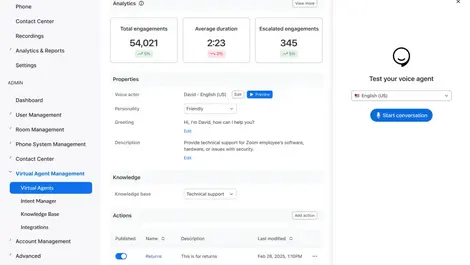
Zoom unveils Virtual Agent 3.0 for complex CX tasks
Wed, 25th Feb 2026
#
uc
#
digital transformation
#
cx
Zoom launches Virtual Agent 3.0 to automate complex, end-to-end customer journeys, promising higher first-contact resolution and transparency.