

Inside A Fonterra Division's Data Overhaul: From Basement Servers to AI-Powered Insights
Fri, 4th Sep 2026%201.webp)
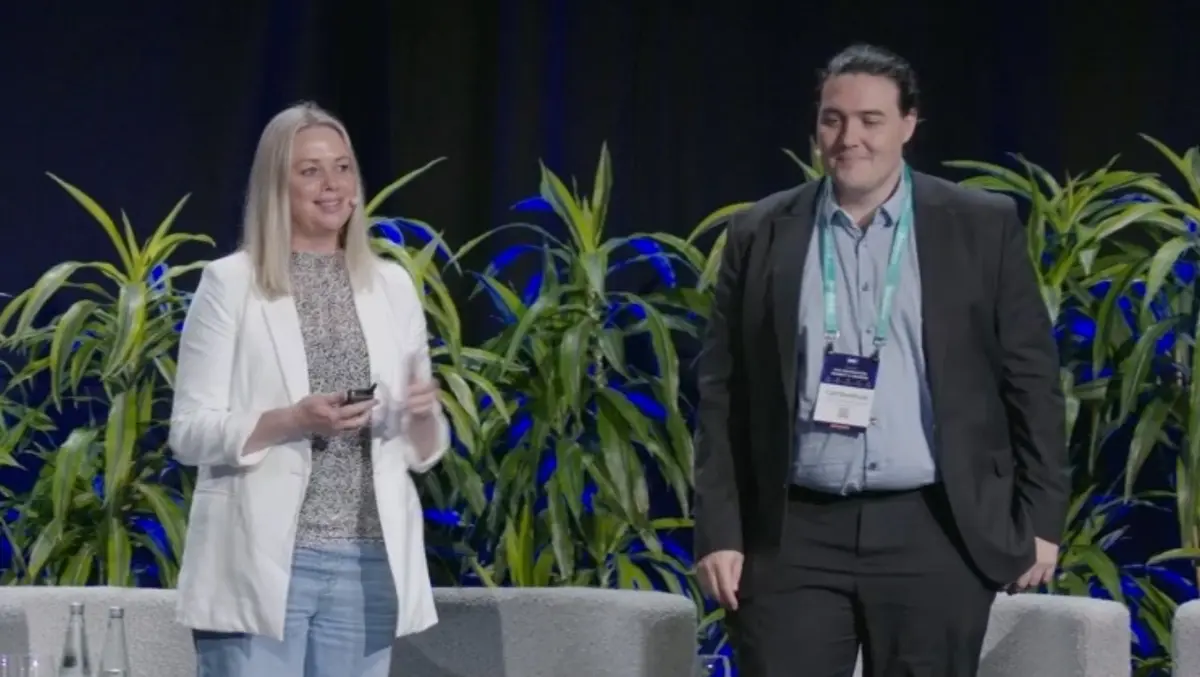
At Fonterra's Global Ingredients division, unlocking data value across 100+ export markets required tackling a legacy data debt that was quietly capping insight potential and IT engineering resources. Xanthe Sulzberger, Head of Product, Global Ingredients, and Curt Roehricht, Data Engineering Manager, detailed how the team retired a decade-old system and transitioned to a modern data platform.
By replacing disparate legacy servers with a modern architecture and AI interfaces, the team achieved a rare feat: delivering the platform overhaul ahead of schedule, under budget, and directly into the hands of business users.
The legacy bottleneck: What was MAS?
For over a decade, the business unit relied on the Market Analytics System (MAS), which gathered market signals, customer demand metrics, pricing risks and milk supply forecasts. It powered reporting dashboards, operational workflows and machine learning models.
But the system had become severely constrained:
- Excessive Operational Overhead: About 50% of engineering time was consumed by maintenance, debugging and other Business As Usual demands.
- Physical Scaling & Capacity Limits: Physical servers kept in a basement were reaching CPU and memory limits, forcing teams to manually stagger jobs.
- Governance & Data Quality Risks: Hard-coded configurations, limited documentation and dependence on external vendors created significant challenges.
The decision to migrate
By late 2024, an external assessment confirmed MAS could no longer scale to support future business needs.
At the same time, Fonterra was starting to adopt the Databricks platform across the wider business. Rather than upgrading the legacy infrastructure piecemeal, the Global Ingredients team aligned with this broader direction, resulting in a consistent architecture.
Execution & timelines: A ground-up reconstruction
The team avoided a "lift and shift" - simply moving existing problems to a new platform. Instead, they rebuilt the system from the ground up.
- Early 2024: External assessment undertaken.
- Late 2024: Decision made to decommission and replace MAS.
- Early 2025: Build phase kicked off on Databricks.
- Mid 2026: Platform transformation largely completed, with legacy infrastructure being decommissioned.
Rebuilding allowed the team to audit legacy requirements, identify historical errors and replace fragile web scrapes with API connections. The migration was completed under budget and ahead of schedule.
The new solution: Intuitive AI with Databricks genie
Modernising the data foundation was only half the battle. To empower business users, Fonterra deployed Databricks Genie Agents, an enterprise AI interface sitting on top of its data.
Instead of relying on IT teams or manually exporting and manipulating data in Excel, users could interrogate datasets directly. Within the first month, two use cases were already delivered:
- Milk Supply Forecast Analysis: Analysts can interrogate forecast accuracy across regions, evaluate environmental drivers, and quickly diagnose variance drivers.
- Pricing Forecast Analysis: Teams compare model-based pricing against market benchmarks, analyse product horizons, and summarise key movements in minutes.
Realising tangible business value
The new platform reduced friction between users and the data they need:
- Faster Insights: Data that previously required manual exports and Excel manipulation can now be accessed in minutes.
- Better Insights: Genie's wide data access allowed it to uncover relationships and insights that were not initially obvious for users, helping them explore new hypotheses.
- Less Friction: Users can conduct ad-hoc analysis and generate commentary to validate market hunches that previously might not have been investigated due to effort required.
Key learnings for finance & executive leaders
- Target Specific High-Pain Use Cases: Avoid trying to solve everything at once. Start with specific operational pain points where data can deliver clear value.
- Co-Design with Users: Business users understand the data context. Let them lead evaluation and testing, and involve them early rather than waiting for a finished product.
- Iterate Quickly: Get imperfect solutions in front of users early, then refine them based on what they actually need.
- Monitor Adoption Closely: Track whether reports and AI tools are being used and delivering value. If they aren't, go back to the drawing board rather than creating unused clutter.
-
Continue the conversation:
Xanthe will be joined by Prasanna Samarakoon (Rabobank NZ) and Manvi Madan (SkyCity Group) at the CFO Summit in September for the panel Building a strong data-strategy, the foundations for business performance, exploring how finance leaders can build stronger data foundations and turn data into business value. It is one panel finance leaders will not want to miss in 2026.
CFO Summit | 8 Sept 2026, NZICC, Auckland - Learn more:
https://brightstar.co.nz/events/cfosummit
