

New Zealand grocers widen ranges, boosting shelving demand
Mon, 9th Nov 2026 (Today)
Volume is expanding after a series of acquisitions as New Zealand grocery retailers widen product ranges and need more inventory capacity. It is targeting an additional AUD $20 million in annual recurring revenue over the next four to five years.
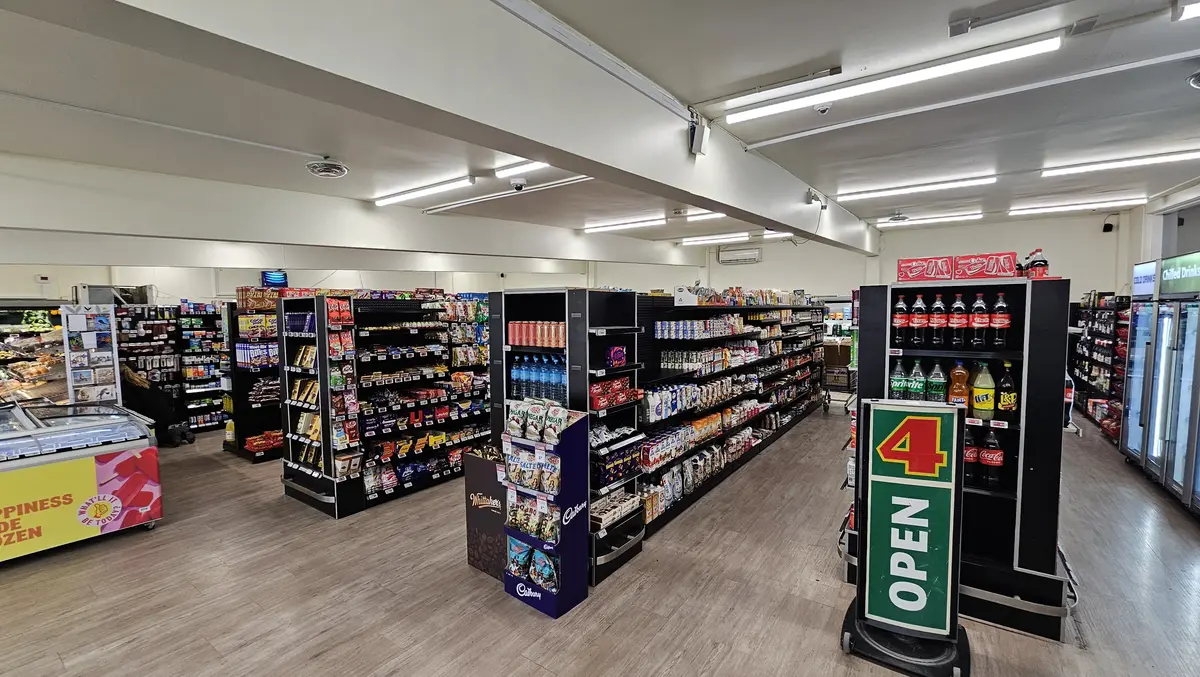
Industry data cited by the business points to changing shopping habits that are pushing smaller neighbourhood grocery stores towards a mini-supermarket model. That is lifting demand for shelving, pallet racking and other storage systems in stores, warehouses and distribution centres as retailers try to fit more stock into limited space.
Scott Currie, General Manager of Volume, said the shift starts with how consumers spread their spending across different formats and brands.
"Ultimately, what is happening in our industry starts with changes in the way people shop. FMCG industry data shows shoppers now visit an average of 5.3 times a week across 3.5 retail brands, moving between supermarkets, specialist retailers and other channels.
"Retailers are responding by carrying larger ranges and changing their store formats. That means more individual products have to be displayed in stores, and more inventory has to be held and moved behind them."
Government grocery data has also shown smaller retailers widening their ranges, specialist stores entering new categories and non-traditional operators taking a bigger role in food retail. The result, Volume said, is a narrowing distinction between convenience stores and supermarkets.
One example involved a Four Square outlet where the number of individual product lines rose from about 2,000 to roughly 5,000. That kind of increase puts pressure on both retail floor space and back-of-house storage.
Currie said neighbourhood grocery stores now have to support broader everyday shopping needs without a matching increase in building size.
"For many New Zealanders, a Four Square was traditionally somewhere you stopped for milk, bread and a relatively small number of essentials.
"What we are increasingly seeing is something much closer to a mini-supermarket, where consumers expect to find a substantially wider range of products closer to home.
"If you more than double the number of products being offered without more than doubling the building, every part of the store has to work harder."
Store layout
As stores carry more lines, retailers are paying closer attention to layout and presentation. Currie said the challenge is not just fitting more stock into a site, but doing so without making it harder to shop.
"You cannot just cram another few thousand products into the building. The store still has to feel open, products have to be visible and easy to find, and the customer has to be able to move around comfortably.
"That means shelving is increasingly being designed as part of the overall retail environment rather than simply as somewhere to put products."
Volume has been adding features such as timber-framed end bays and wire shelving to some retail projects, while also developing systems tailored to customer requirements. In larger supermarkets, operators are seeking small gains in storage density across entire sites.
That includes more precise shelf and racking adjustments. In large supermarket settings, pallet racking can now allow beam levels to be adjusted at 25mm intervals rather than the older 75mm spacing, helping stores reduce unused vertical space.
Currie said the effect can be significant when repeated across thousands of products.
"When you have thousands of products in a supermarket, every unnecessary gap between one shelf and the next is space that could potentially be used for another product or additional stock.
"A few centimetres does not sound significant, but multiply that across an entire supermarket and it becomes a considerable amount of usable space."
Supply chain
The increase in store-level range is also affecting distribution networks. More products on shelves means more inventory must be stored elsewhere, while online shopping is shifting stock that may once have sat in stores into warehouses and third-party logistics facilities.
Currie said larger logistics buildings are also using more vertical space, increasing the need for engineering input around loads, building height and seismic requirements.
"More products on the shelf means more inventory has to be held somewhere. At the same time, more stock is being concentrated through central distribution centres, and online shopping is moving inventory that may once have sat in stores into warehouses and third-party logistics facilities.
"The consumer may never see those buildings, but changing consumer behaviour is helping drive their growth."
He added that the same trend is increasing the scale of individual projects, with some now reaching seven figures. If installation volumes track with its growth plans, Volume said it could install more than 650km of shelving and racking over five years.
Acquisition drive
The expansion follows a run of acquisitions that has reshaped the business over the past several years. The company started as Shelving Shop in 1993, then added RMS and Top Shelf before acquiring storage manufacturer Novalok in late 2023.
That deal brought engineering, product development and domestic manufacturing into the group. The businesses were then integrated over 29 months and united under the Volume brand.
Headcount has risen to more than 20 from about nine three years ago. Currie said the acquisitions have also expanded the company's role from supplying individual fixtures to working across the movement of inventory from goods intake through storage, replenishment and distribution to final display or use.
"The underlying problem we solve has not really changed. It is still about how a business stores its products and makes the best use of the space available.
"What has changed is the scale and complexity of the infrastructure needed to do that.
"We are increasingly looking at the entire movement of inventory through a store or warehouse rather than one isolated part of it, and that is where we see the next stage of growth coming from."