

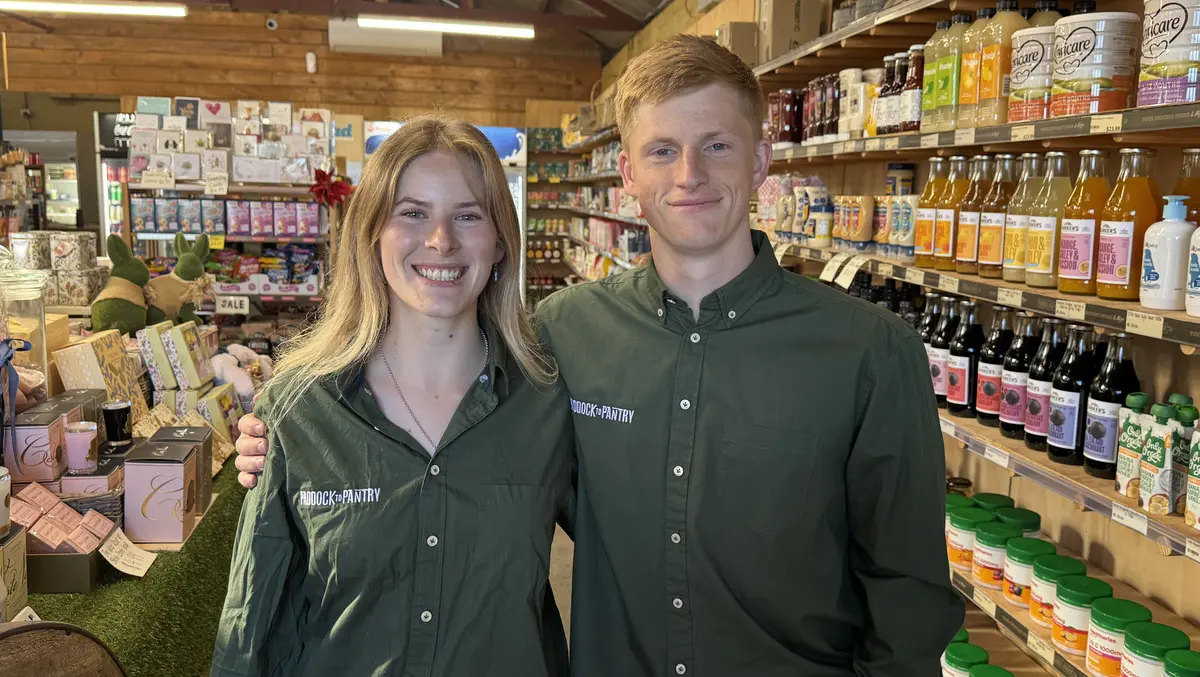
Paddock to Pantry plans 20 New Zealand supermarket openings
Mon, 12th Oct 2026 (Today)
Paddock to Pantry plans to invest $25 million to open more than 20 supermarkets in New Zealand, creating up to 1,000 jobs over five years.
The independent grocery retailer will begin with a new store in Kinloch, near Taupō, followed by further openings on the North Island's East Coast and in South Auckland. The programme would expand its network from two stores to more than 22 sites nationwide.

The business has so far operated mainly online, with physical stores in Karaka and Kahawai Point, Glenbrook. E-commerce currently accounts for about 90% of sales, though that share is expected to fall as more stores open.
Paddock to Pantry is seeking sites ranging from 500sqm to 1,800sqm, with larger locations expected to employ about 50 people each. Alongside the store rollout, it also plans to build a new 5,000sqm distribution centre and expand its delivery fleet to 25 vehicles.
Sales rose 197% in the 12 months to 31 July 2026, according to the retailer. It now processes thousands of orders a day, sells more than 2,000 products, and sources more than 99% of purchasing by value directly from manufacturers.
Capital constraint
John Kennerley, Business Manager at Paddock to Pantry, said access to finance remains the main barrier to faster expansion, rather than a lack of suitable premises.
"The groundwork has already been done through changes to supermarket competition settings. Those reforms have opened the door for independent operators like us to compete, and we've demonstrated that the model works.
"We've already done much of the heavy lifting. We have the distribution infrastructure in place, direct relationships with the major grocery manufacturers, and a pricing model that allows us to compete.
"Suitable retail sites are available, and we've identified locations where we believe there's sufficient demand for another supermarket.
"Scaling from here is largely a matter of securing the capital to fit out stores, stock shelves, and employ local people.
"That's why access to low-interest funding could make such an immediate difference. We're not asking the Government to fund the creation of a new supermarket business. We're talking about helping established operators replicate a model that's already working."
Kennerley is calling for a government-backed Supermarket Growth Fund that would offer low-interest loans to privately owned grocery operators with established operations and expansion plans. He said such a fund could help second-tier supermarket businesses expand more quickly without direct state ownership of stores.
"Unlike the major supermarket groups, privately owned operators don't have access to the same financial resources, so expansion has to be funded progressively.
"With access to low-interest, repayable loans, we believe we could at least double our current rollout and potentially triple it. That would mean more supermarkets opening and more jobs being created over the same period.
"We don't necessarily need another major overhaul of supermarket competition policy. The existing settings are starting to work, but it takes time for independent competitors to build scale.
"Rather than waiting for another international supermarket chain to enter New Zealand and establish a national network from scratch, we could accelerate the growth of businesses already operating here.
"For a relatively modest financial commitment, the Government could unlock substantially greater private investment and bring meaningful competition to underserved communities much sooner."
Store strategy
The company aims to target communities with limited supermarket choice, including regional centres and metropolitan suburbs. It plans to use a mix of formats, with smaller stores combining grocery retailing with prepared food and other services, while larger sites would operate more like conventional supermarkets.
Changes to wholesale grocery access arrangements helped it build the purchasing volume needed to negotiate directly with major manufacturers, according to Paddock to Pantry. Kennerley said those supplier relationships now support the move into a broader physical store network.
"We're not building a handful of specialty food stores. Our ambition is to become New Zealand's third-largest grocery retailer and provide a genuine alternative to the two dominant supermarket groups.
"We've demonstrated that we can compete online on price, range, and service. The next stage is translating that into a physical network that brings those benefits directly into more communities."
The proposed distribution centre would add capacity beyond the company's existing infrastructure and support both store openings and its online grocery business. Kennerley said improved road links between Auckland, Hamilton, and Taupō had also made wider distribution more commercially viable.
"Every new supermarket represents local employment, investment in commercial property, and additional demand for transport and distribution services, as well as greater choice for consumers.
"We believe New Zealand's next major source of supermarket competition can come from the privately owned operators already in the market. The opportunity now is to give those locally owned businesses the means to grow much faster."